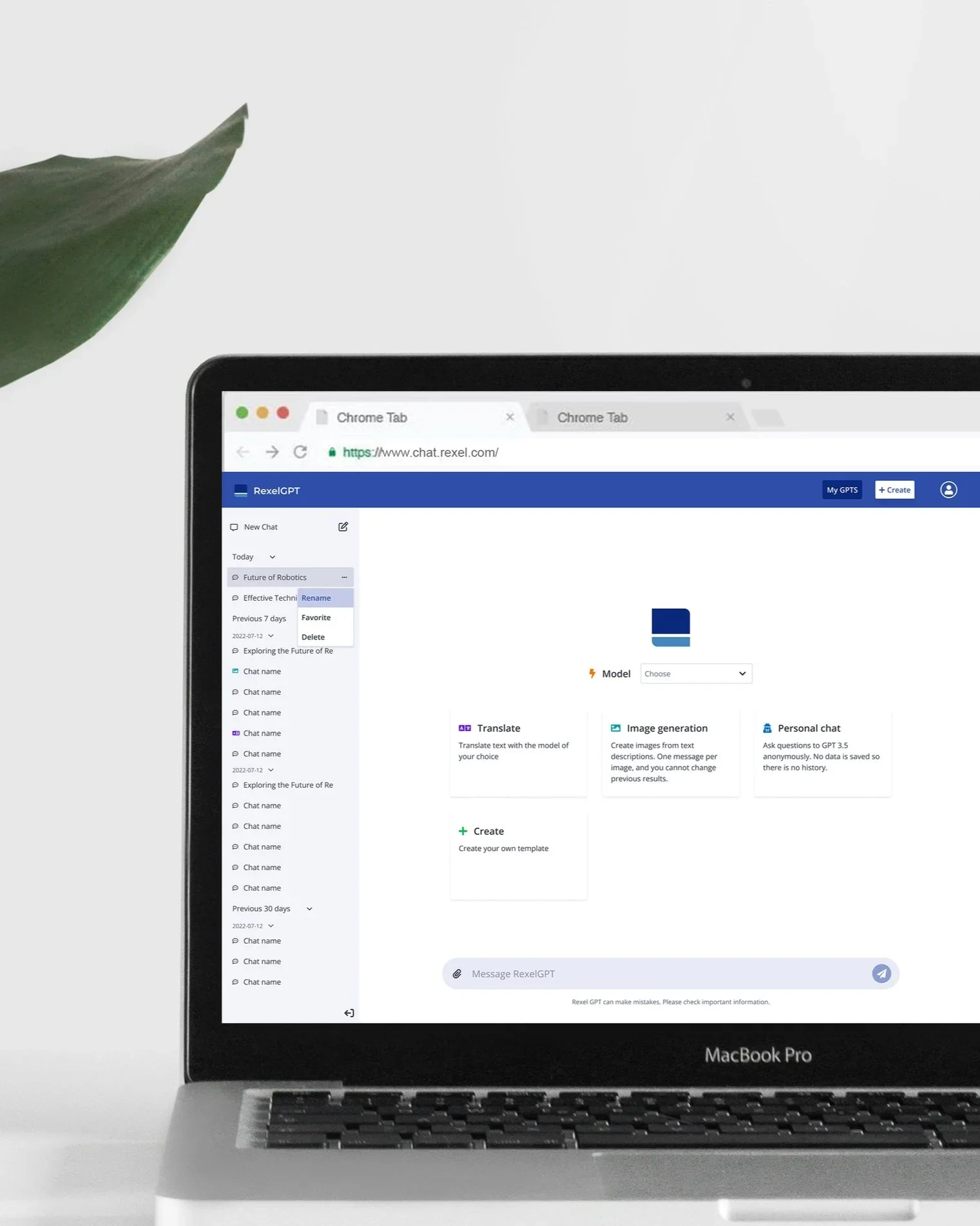
REXEL GPT REDESIGN
Rexel GPT is an AI-driven solution integrated within Rexel's ecosystem, designed to enhance user experience, operational efficiency, and business growth.
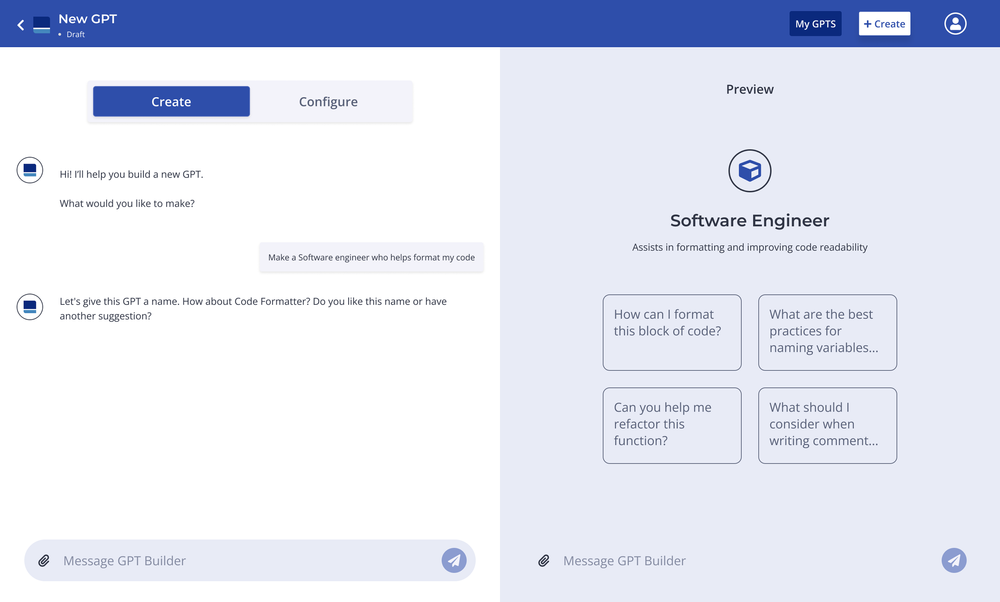
The project focused on revamping the GPT interface to align with Rexel’s Design System, while adding advanced features tailored to the specific needs of various teams, including Customer Support, Store Employees, the Marketing Team, and Developer and IT teams.
The enhancements aimed to open new revenue streams, improve customer satisfaction, and streamline operations.
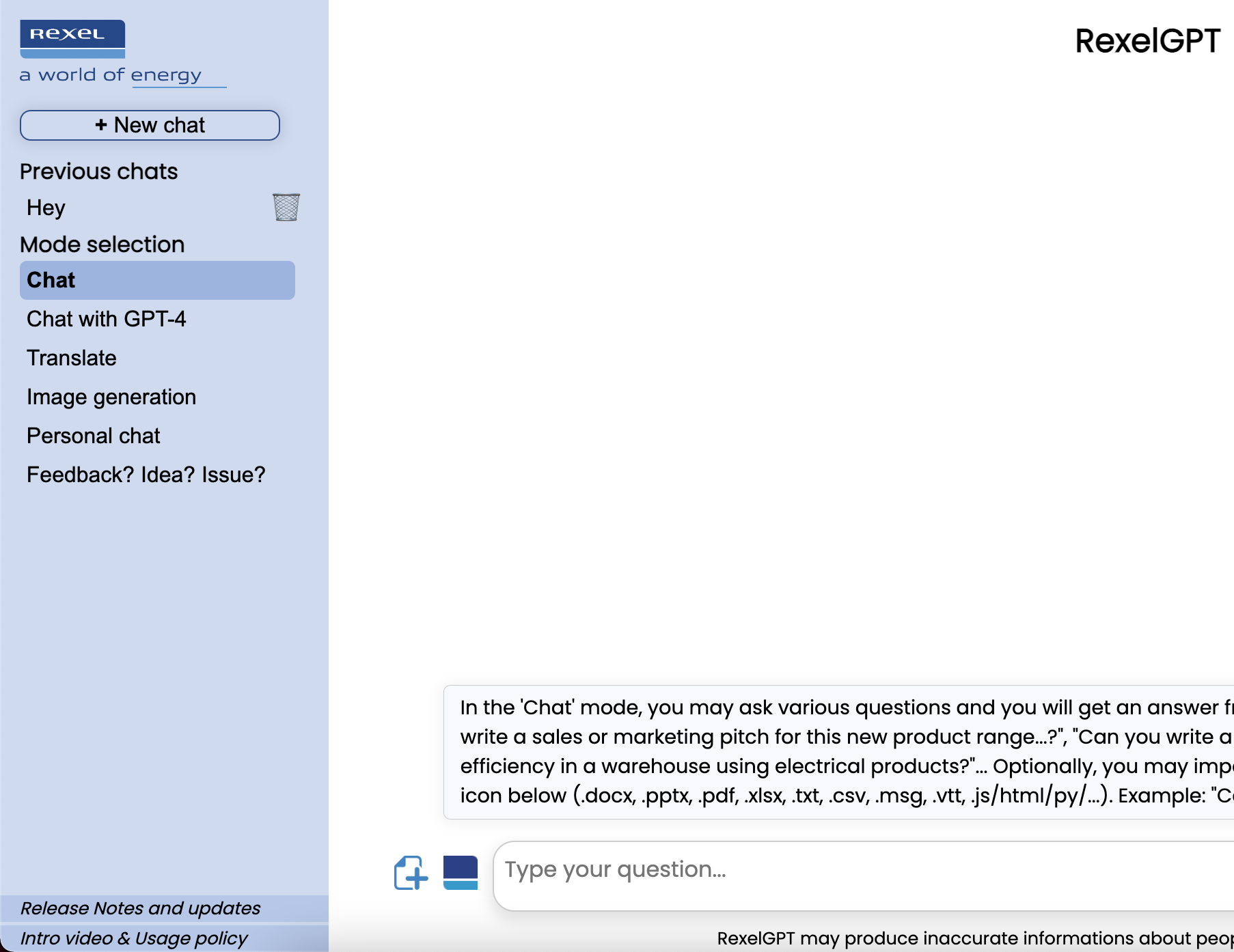
The Challenge
⊛Integrate GPT technology into Rexel's system while aligning with brand identity and design guidelines.
⊛Ensure the solution caters to diverse user groups with unique requirements.
⊛Drive measurable business outcomes: increase revenue, reduce operational costs, enhance customer engagement.
Objectives
UI Integration: Update the GPT interface to reflect Rexel's Design System, ensuring consistency and usability.
Customization: Develop specific modes and customization options for Customer Support, Store Employees, Marketing, and Developer/IT teams.
Business Growth: Leverage GPT capabilities to open new revenue streams and improve operational efficiency.
User Experience: Enhance the overall user experience through personalized interactions and reduced response times.
Compliance and Security: Ensure that the GPT system complies with data privacy regulations and maintains high security standards.
My Process
WHO
Customer Service Representatives: The front-line staff managing customer inquiries and ensuring customer satisfaction.
Store Employees: In-store personnel responsible for assisting customers, managing inventory, and ensuring a seamless shopping experience.
IT Representatives: The technical team maintaining the e-commerce platform, ensuring system stability, and providing technical support.
Marketing Team: The team responsible for promoting products, analyzing customer data, and executing marketing campaigns.
Immediate (0-3 months): Assess current pain points, identify areas for quick wins, and start with pilot implementations in customer service.
Short-term (3-6 months): Roll out the solution to store employees and the IT team, with ongoing monitoring and adjustments.
Medium-term (6-12 months): Expand the solution to the marketing team and optimize the process across all departments.
Long-term (12+ months): Continuously refine the AI tool's capabilities based on feedback and evolving business needs, ensuring it remains effective and efficient.
WHO
WHEN
Online Channels: Customer service chatbots, IT support portals, and marketing automation tools on the website and mobile app.
In-Store: Tools accessible to store employees via tablets, kiosks, or other digital devices.
Back-End Systems: Integrated into the IT support infrastructure and marketing analytics platforms to streamline operations and enhance data-driven decision-making.
WHERE
Increase Efficiency: Reduce response times, improve accuracy, and enable staff to focus on higher-value tasks.
Enhance Customer Experience: Provide faster, more personalized service, leading to higher customer satisfaction and loyalty.
Boost Productivity: Automate repetitive tasks, freeing up resources and reducing the potential for errors.
Drive Revenue Growth: Enable more effective marketing campaigns, increase conversion rates, and capitalize on upsell and cross-sell opportunities.
Ensure Scalability: Prepare the business to handle increased demand without compromising service quality, supporting long-term growth.
Enhance customer service: By providing instant, accurate responses to customer inquiries and automating routine tasks.
Improve in-store assistance: By equipping store employees with quick access to detailed product information and personalized customer recommendations.
Boost IT efficiency: By automating routine support requests and maintaining an up-to-date knowledge base.
Support marketing efforts: By generating content, analyzing data, and personalizing marketing messages.
WHEN
My Approach
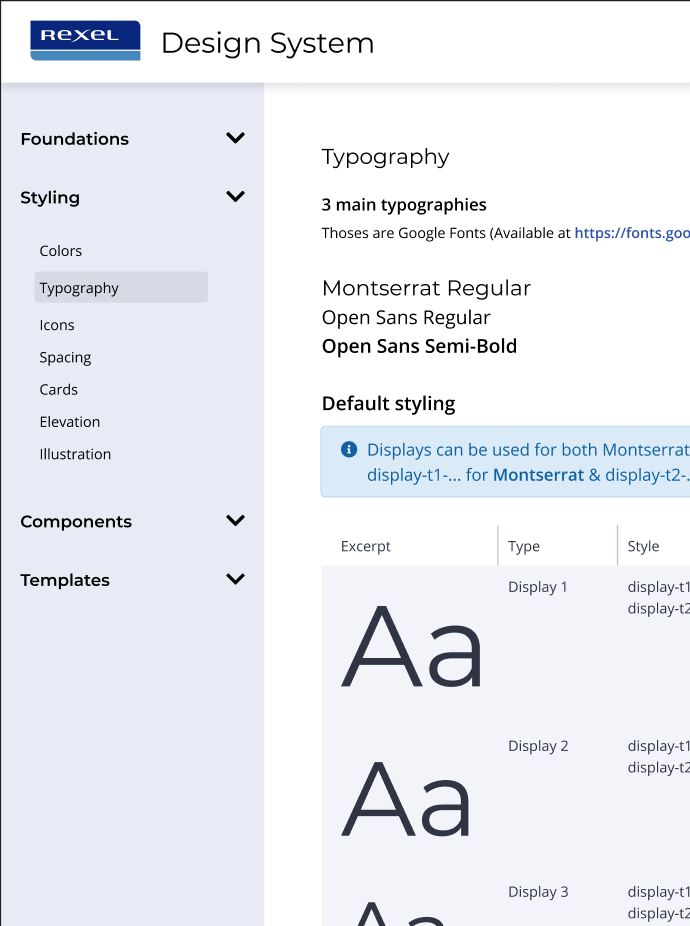
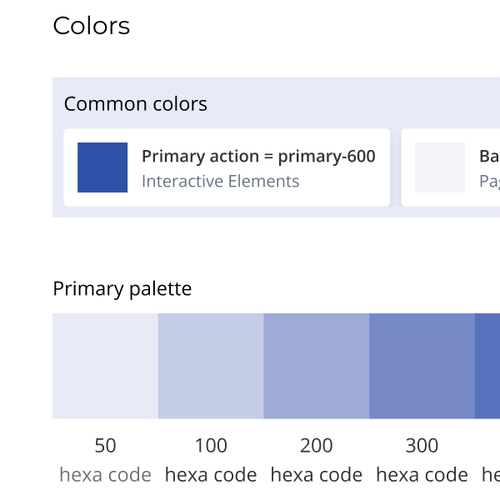
Design System Alignment
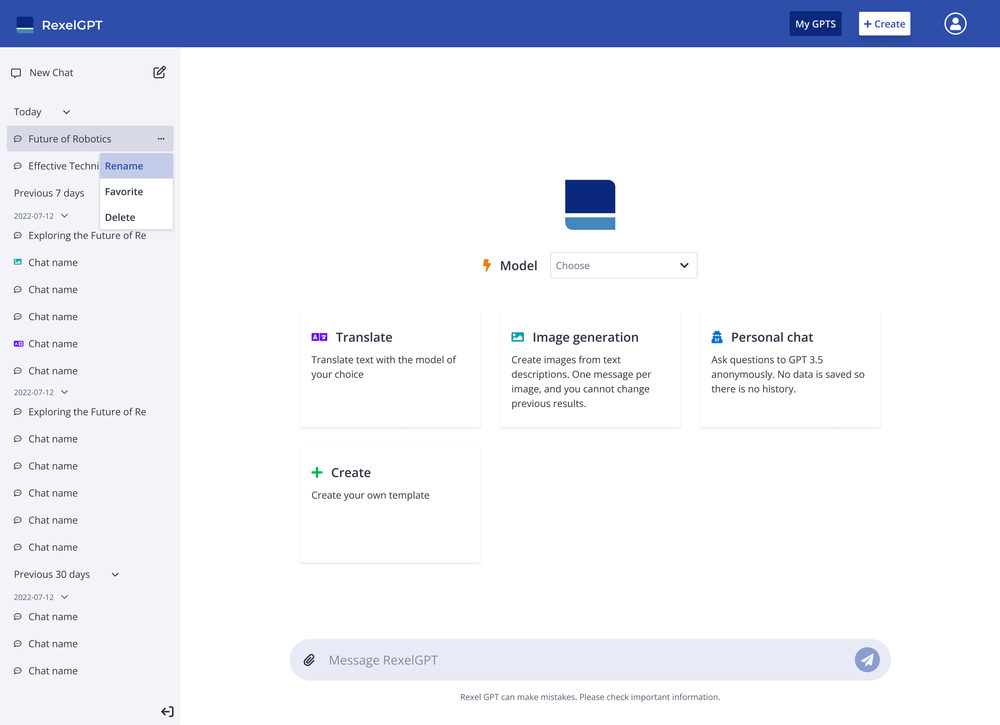
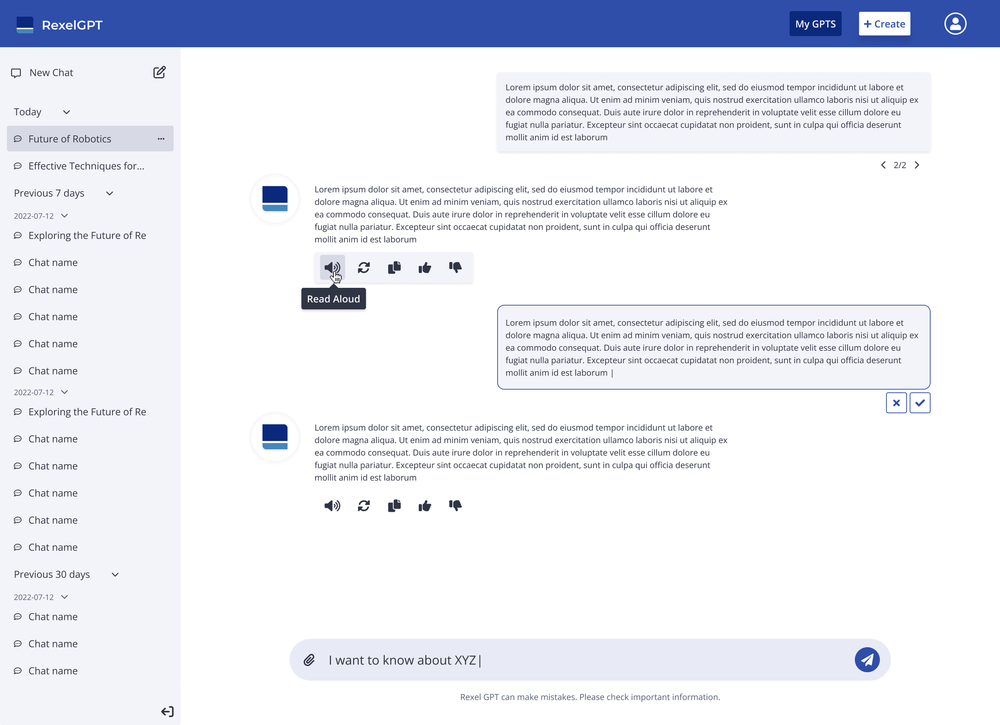
The UI was redesigned to align with Rexel's Design System, ensuring a seamless and intuitive user experience across all interfaces.
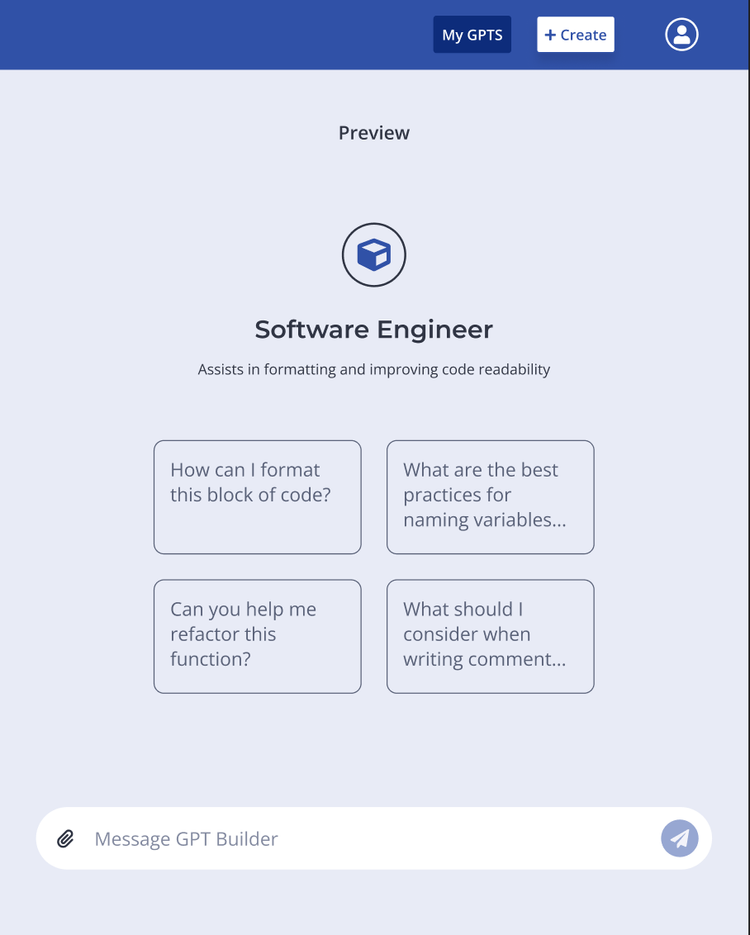
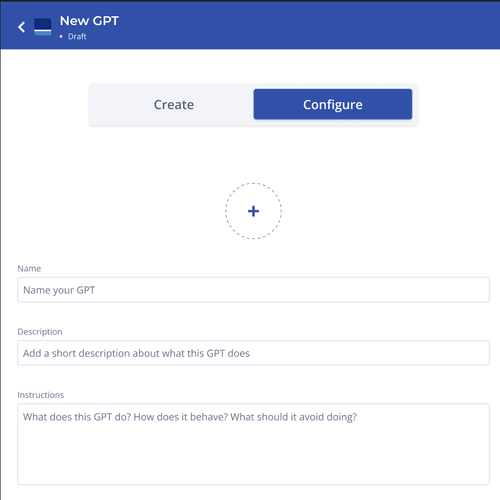
User-Centric Customization
We developed distinct modes and customization options for different teams, allowing them to maximize the benefits of GPT according to their specific needs.
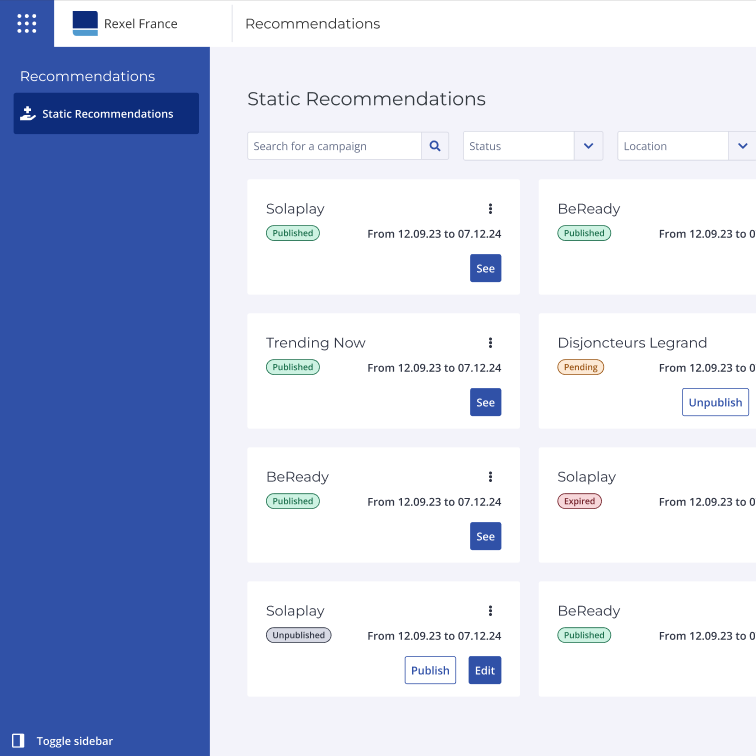
Business Strategy Integration
Focused on integrating GPT-driven strategies for upselling, cross-selling, and dynamic pricing to boost revenue.
Operational Automation
Automated routine tasks like customer support and content creation to reduce costs and improve efficiency.
User Testing
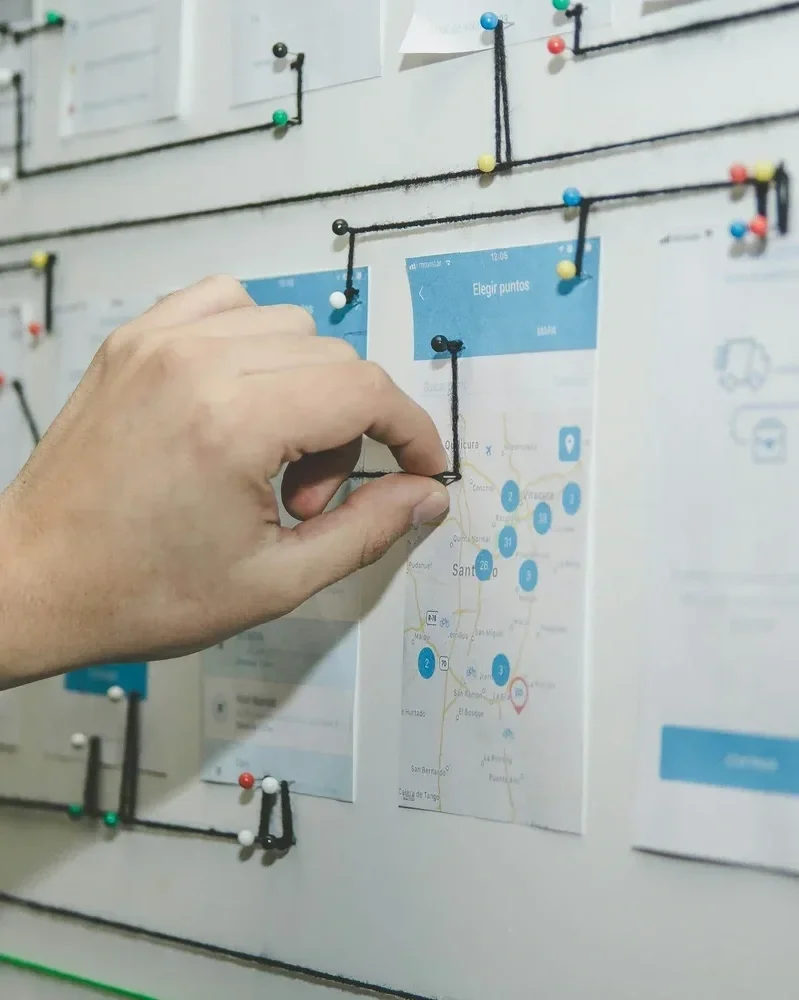
Conducted extensive user tests across different teams to gather feedback and refine the solution, focusing on usability, response time, and overall satisfaction.
The Solution
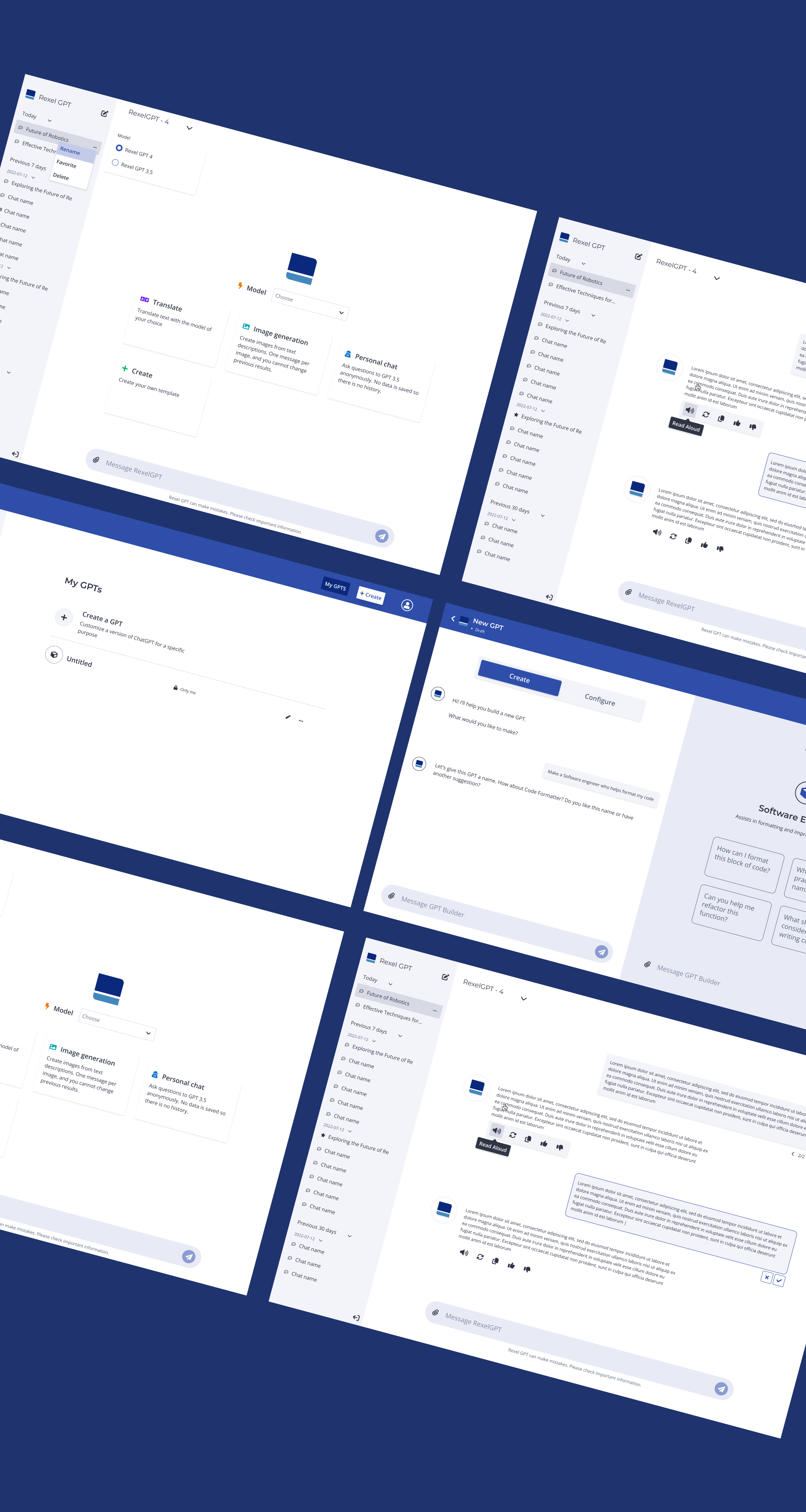
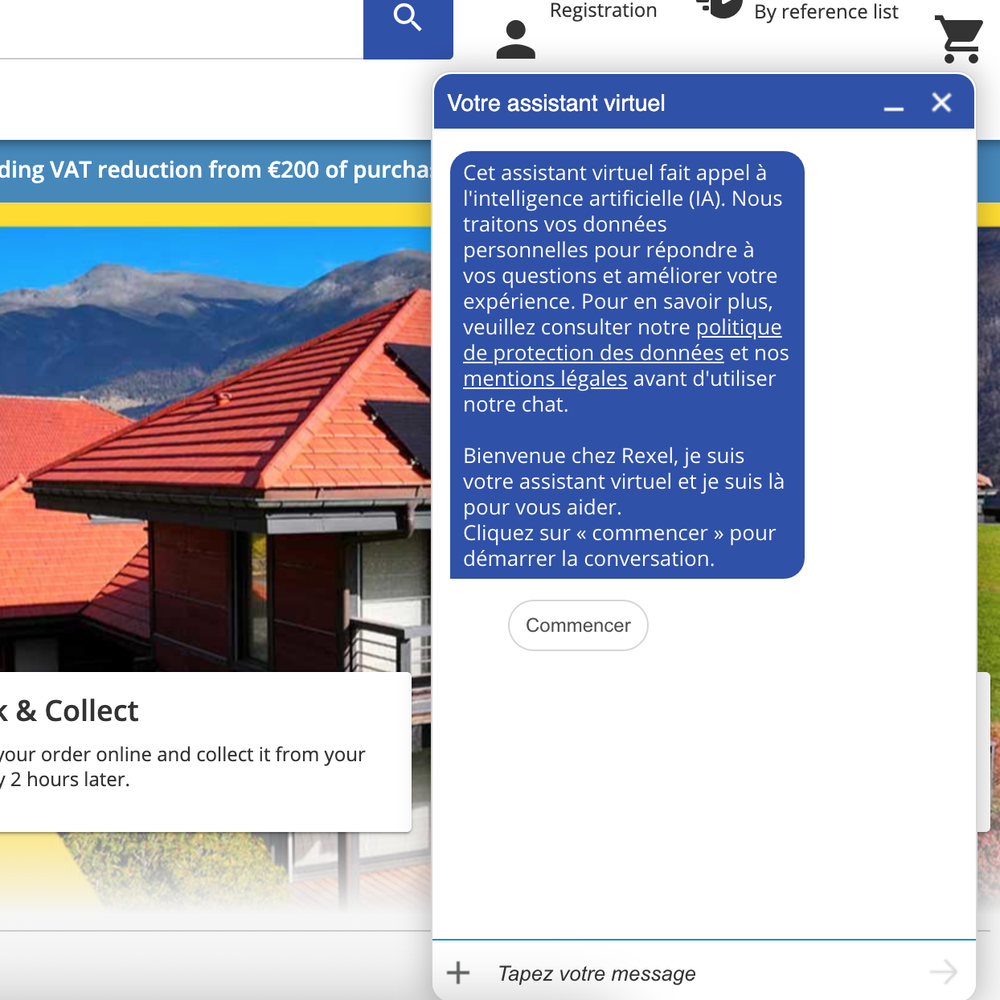
The revamped Rexel GPT interface featured a design that was consistent with Rexel's Design System, ensuring brand cohesion. We introduced specific modes for different user groups, and wanted to foster that sense of familiarity to our users. Following a the interface they might already know - ChatGPT.
Earlier in the year we conducted user tests to understand the cognitive biases and the habits that are created in our users based on the products that they use. ChatGPT’s model.
1. Trigger
External Trigger: The user's need to solve a problem, get information, or seek assistance. This could be triggered by curiosity, work-related tasks, or even boredom, leading them to interact with ChatGPT.
Internal Trigger: Over time, users may form an internal trigger, such as the thought, "I can ask ChatGPT," whenever they face a question or problem.
2. Action
Behavior: The user types a query or request into the chat interface. The ease of action is facilitated by the accessibility and simplicity of the interface, making it frictionless to engage.
3. Variable Reward
Response: ChatGPT provides answers or suggestions. The reward is variable because the quality, depth, and usefulness of the response can vary. This variability creates a level of anticipation and keeps the user engaged, as they are curious about what response they will receive.
4. Investment
User Input: The more users interact with ChatGPT, the more they invest their time and data into the system. This can include providing more detailed queries, giving feedback, or refining their questions to get better results. This investment increases their attachment and makes them more likely to return.
The Results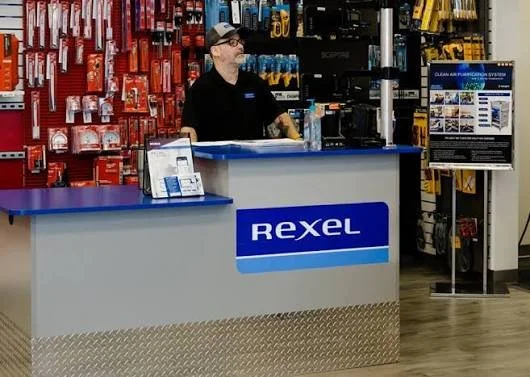
The new Rexel GPT has been launched on our UAT portal and based on the tests that we were able to launch on our users, here is what we uncovered..
Customer Support


Reduction in Response Time: 31% reduction in response times for customer inquiries.
Increase in Customer Satisfaction: 20% improvement in customer satisfaction due to faster and more accurate responses.
Cost Savings: 18% reduction in operational costs associated with customer support.
Marketing Team
Campaign Effectiveness: 10% increase in customer engagement through AI-driven personalization.
Customer Retention: 11% improvement in customer retention from personalized offers and recommendations.
Revenue Increase: 15% growth in revenue from repeat customers driven by targeted marketing campaigns.
The Rexel GPT project successfully integrated advanced AI technology within Rexel’s ecosystem, resulting in significant improvements in user experience, operational efficiency, and will result in business growth. The redesigned UI and tailored features for different teams not only enhances user satisfaction but also opens up new revenue opportunities and reduced operational costs. This project stands as a testament to the potential of AI-driven solutions in driving business success and improving customer experiences.